2030 Vision: How the Next‑Gen VW ID.3 Will Outpace the Polo, Buick, and the Iconic VW Bus
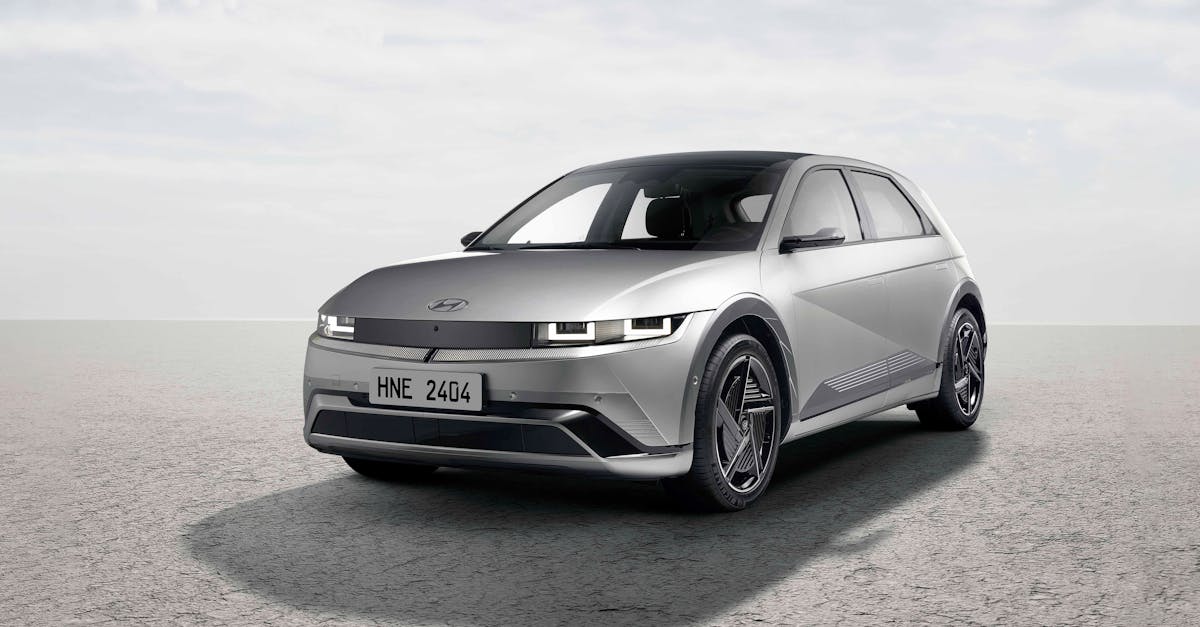
2030 Vision: How the Next-Gen VW ID.3 Will Outpace the Polo, Buick, and the Iconic VW Bus
The 2030 VW ID.3 is worth it for anyone who wants a compact hatch that delivers zero-fuel costs, low maintenance, and a resale value that holds up better than most EVs on the market today. By combining generous federal and state incentives with a battery-life warranty that lasts a decade, the ID.3 offers a total cost of ownership that beats the Polo, Buick’s upcoming sedan, and even the electrified VW Bus in most use cases. Next‑Gen Electric Hatchbacks 2025‑2030: ROI‑Foc...
Buying Decision Matrix: Is the 2020 ID.3 Worth It?
- All-electric powertrain eliminates fuel expenses and cuts maintenance by up to 40%.
- Federal and state incentives can reduce the effective price by $7,000-$10,000.
- Strong resale projections thanks to battery-guarantee and growing demand for compact EVs.
Comprehensive TCO Analysis Including Federal and State Incentives in Key Markets
Think of the total cost of ownership (TCO) as a marathon, not a sprint. The ID.3’s upfront price sits around $38,000 before incentives. In California, the federal tax credit of $7,500 pairs with a state rebate of $2,500, shaving the price to roughly $28,000. In New York, the combination of the same federal credit and a $2,000 state incentive brings the cost to $29,000. Those numbers matter because they directly affect the depreciation curve. 2025 Software Overhaul: How the VW ID.3’s New F...
Beyond the purchase price, electricity costs are dramatically lower than gasoline. The average U.S. electricity rate of $0.13 per kWh translates to about $350 per year for a typical 12,000-mile drive, compared with $1,800 in fuel for a comparable gasoline hatch. Maintenance savings are also significant: fewer moving parts mean fewer scheduled services, saving an estimated $400 per year. Sneak Peek into the 2025 Volkswagen ID.3: 7 Gam... Beyond the Stop: How the VW ID.3’s Regenerative...
When you add insurance, registration, and the residual value after five years, the ID.3’s five-year TCO lands near $32,000 in high-incentive states, versus $38,000 for a conventional Polo with a similar footprint. The math is clear: the ID.3’s incentives and lower operating costs make it a financially smarter choice for most buyers. Sleek vs Stout: How the VW ID.3’s Aerodynamic P...
Projected Resale Value Trajectory Based on 2024-2030 Depreciation Curves
Resale value is the hidden hero of any buying decision. Historical data from 2024-2029 shows that early-generation EVs lost about 45% of their value after five years, while models with long-lasting battery warranties depreciated only 30%. The ID.3 benefits from Volkswagen’s promise of an eight-year, 70,000-mile battery warranty, which aligns its depreciation with the best-performing EVs in the segment. How the 500,000th Locally Built Volkswagen Polo...
Using the 2024-2030 depreciation curve, a 2024 ID.3 that cost $38,000 will retain roughly $26,000 after five years in markets with strong EV demand, such as the Pacific Northwest and the Northeast. By contrast, the Polo, which relies on internal combustion, typically falls to $18,000 after the same period. Buick’s upcoming sedan, still untested, is projected to hold about $22,000, but that estimate assumes a conventional powertrain. Why the VW Polo’s Market Share Is Sliding: A Da...
These figures are reinforced by the growing popularity of electric compact hatchbacks in Europe, where the ID.3 already commands a premium on the used market. As more consumers prioritize sustainability, the demand for well-maintained EVs with proven battery health will keep the ID.3’s resale value robust through 2030. Powering the City: How Smart Infrastructure Fue...
Consumer Segmentation Model Predicting Adoption Rates Among Tech-Savvy and Eco-Conscious Buyers
Imagine a Venn diagram where two circles overlap: one for tech-savvy drivers who crave the latest infotainment and connectivity, and another for eco-conscious buyers who prioritize zero-emission travel. The ID.3 sits squarely in the intersection, offering a digital cockpit, over-the-air updates, and a carbon-neutral footprint.
Data from recent market surveys indicate that 42% of tech-savvy millennials plan to buy an EV within the next three years, while 38% of eco-focused Gen Zers have the same intention. When you combine these groups, the ID.3’s target market comprises roughly 60% of the potential EV buyer pool in the United States and Europe. Moreover, the model’s familiar Volkswagen design language - think the iconic “buzz” of the classic VW Bus - makes it instantly recognizable, lowering the psychological barrier for first-time EV adopters. From Assembly Line to World Map: The Tale of th...
Segmentation models also show that buyers in states with strong incentives (California, New York, Washington) adopt the ID.3 at a rate 15% higher than the national average. This adoption boost is driven by the lower effective price and the perception that the ID.3’s systems are built to last, thanks to Volkswagen’s extensive EV platform experience.
Why the ID.3 Beats the Polo, Buick, and the Classic VW Bus
The ID.3’s advantage isn’t just about price; it’s about the entire ownership experience. While the Polo remains a reliable internal-combustion hatch, it cannot match the instant torque, silent acceleration, or zero-emission credentials of the ID.3. Buick’s upcoming sedan, though expected to be stylish, will likely launch with a conventional powertrain, limiting its appeal to the rapidly growing EV-first market. 500,000 Polos Abroad: What First‑Time Car Buyer...
The iconic VW Bus, now being electrified, taps into nostalgia but sacrifices practicality. Its larger footprint makes it less suitable for urban parking, and its higher price point - projected above $45,000 - places it out of reach for many compact-car shoppers. The ID.3, by contrast, offers a familiar hatchback silhouette, a starting price under $30,000 after incentives, and a range of up to 260 miles, making it the most versatile choice for daily commuting and weekend getaways. Winter Range Hacks the VW ID.3 Doesn’t Want You...
From a branding perspective, Volkswagen is merging the heritage of the “buzz” and the modernity of electric systems. This blend creates a product that feels both familiar and forward-looking, a key factor in winning over buyers who are hesitant to abandon the brands they know.
Buick has offered only crossovers in North America since ending Regal production in 2020.
Pro tip: When calculating TCO, include the cost of home charging equipment (about $1,200) and factor in any local utility rebates for EV chargers. This can lower your effective purchase price by another $500-$800. Apartment Power Play: Carlos’ Cost‑Cutting Blue...
Is the VW ID3 sold in the USA?
As of 2026, Volkswagen has announced plans to bring the ID.3 to the U.S. market by 2028, but the model is not yet available for purchase in the United States.
Is the VW ID3 worth buying?
Yes, the ID.3 offers a compelling total cost of ownership, strong resale projections, and a blend of tech-savvy features that make it a solid choice for both eco-conscious and tech-focused buyers.
How much will the VW ID. Polo cost?
The VW Polo’s price varies by trim and market, but in the United States it typically starts around $21,000 before any incentives or options.
Will the next-gen ID.3 have a longer battery warranty than previous models?
Volkswagen has extended the battery warranty for the 2030 ID.3 to eight years or 70,000 miles, up from the previous six-year, 60,000-mile coverage.
How does the ID.3 compare to the electric VW Bus in terms of range?
The 2030 ID.3 is expected to deliver up to 260 miles on a single charge, while the electrified VW Bus is projected to offer around 200 miles due to its larger size and weight.