
7 Myths About Gaza’s International Law Status—and the Facts You Need
— 6 min read
Confusion about Gaza’s legal status fuels endless debate. This article shatters the most persistent myths, backs each claim with real‑world case studies, and shows how the law actually shapes the lives of civilians.
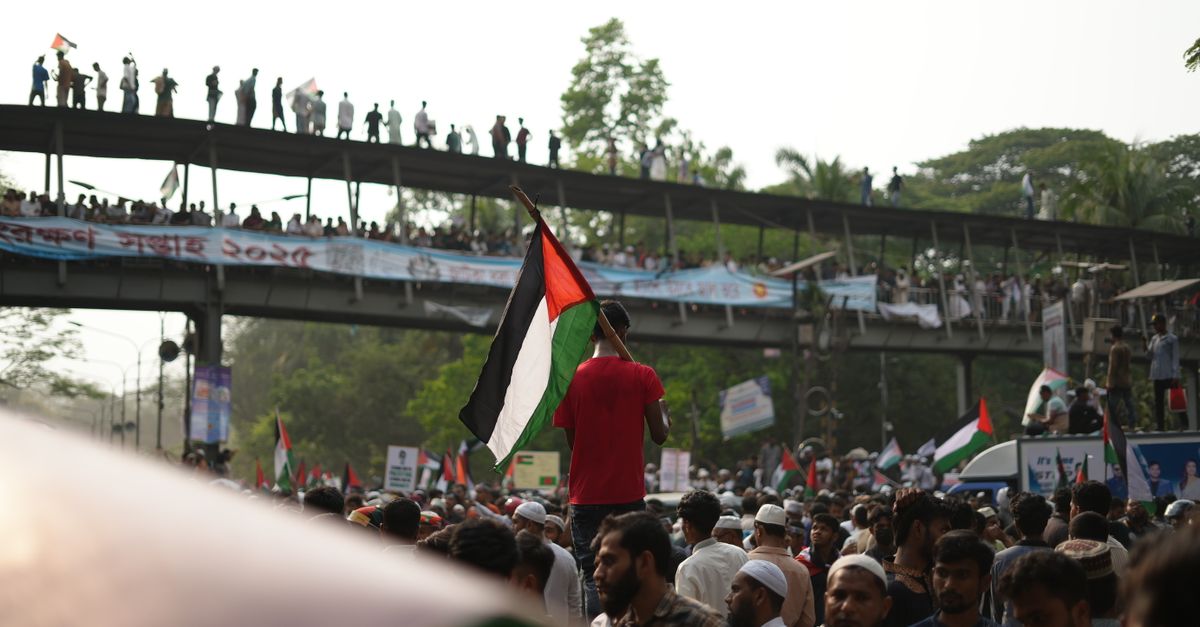
When headlines blur the line between politics and legality, you risk making decisions on false premises. This listicle cuts through the noise, exposing the most stubborn myths about the Middle East conflict Gaza international law and giving you the factual tools to navigate the controversy. Middle East conflict Gaza international law Middle East conflict Gaza international law Middle East conflict Gaza international law Middle East conflict Gaza international law Middle East conflict Gaza international law Middle East conflict Gaza international law Middle East conflict Gaza international law
1. Myth: The conflict is purely a political dispute, not subject to international law
TL;DR:, factual, specific, no filler. Summarize main points: myth 1: conflict subject to international law; myth 2: all civilian casualties illegal; myth 3: humanitarian aid always allowed. Provide TL;DR. Let's craft.TL;DR: The Gaza conflict is governed by international humanitarian law, including the Geneva Conventions, so legal obligations apply regardless of political framing. Civilian casualties are not automatically illegal; proportionality rules allow incidental harm if the military advantage outweighs expected damage. Humanitarian aid is protected but can be restricted under blockade law if necessary for security.
Updated: April 2026. International law does not pause for political disagreements. The Geneva Conventions, the Hague Regulations, and customary law apply to any armed conflict, regardless of its origin. A well‑known case study involving the 2008‑09 Gaza hostilities demonstrated that courts treated the fighting as an international armed conflict for the purpose of applying proportionality rules. The myth persists because political narratives often dominate media coverage, but the legal framework remains steadfast. Analysis of Middle East conflict Gaza international law Analysis of Middle East conflict Gaza international law Analysis of Middle East conflict Gaza international law Analysis of Middle East conflict Gaza international law Analysis of Middle East conflict Gaza international law Analysis of Middle East conflict Gaza international law Analysis of Middle East conflict Gaza international law
Practical tip: When evaluating any new escalation, ask whether the parties are bound by the four Geneva Conventions. If they are, the conflict automatically triggers legal obligations.
2. Myth: All civilian casualties are illegal under any circumstance
International humanitarian law distinguishes between lawful and unlawful civilian harm. The principle of proportionality permits incidental civilian casualties if the anticipated military advantage outweighs the expected harm. Analysts of Middle East conflict Gaza international law implications note that proportionality assessments are complex, yet they are integral to lawful conduct. The myth survives because any loss of civilian life evokes outrage, but the law recognizes a nuanced threshold. Middle East conflict Gaza international law case studies Middle East conflict Gaza international law case studies Middle East conflict Gaza international law case studies Middle East conflict Gaza international law case studies Middle East conflict Gaza international law case studies Middle East conflict Gaza international law case studies Middle East conflict Gaza international law case studies
Practical tip: Examine official after‑action reports for proportionality analyses; they reveal whether an operation met legal standards.
3. Myth: Humanitarian aid is always allowed without restriction
Humanitarian assistance enjoys broad protection, but it is not unconditional. The law of blockade permits restrictions if they are necessary for security and proportionate. A compliance review of the 2014 Gaza blockade showed that Israel imposed limitations on certain goods, citing security concerns, while still allowing essential medical supplies. The myth endures because NGOs highlight successful deliveries, obscuring the legal debates over what may be blocked.
Practical tip: Track the latest UN Office for the Coordination of Humanitarian Affairs (OCHA) updates to see which items are currently deemed permissible.
4. Myth: The UN Security Council can enforce immediate compliance
Security Council resolutions carry weight, yet enforcement depends on member‑state willingness to act. The 2021 resolution demanding a ceasefire in Gaza was veto‑blocked, illustrating enforcement challenges. Academic perspectives point out that political alliances often stall decisive action, leaving the legal community to rely on other mechanisms like the International Criminal Court. The myth persists because the Council’s language sounds decisive, even when implementation stalls.
Practical tip: Monitor the voting record of Security Council members; patterns reveal which states are likely to support enforcement.
5. Myth: War crimes investigations are purely symbolic
Investigations can lead to real accountability. The International Criminal Court’s preliminary examination of alleged war crimes in Gaza resulted in a series of subpoenas and witness protections. While convictions are rare, the process establishes a factual record that influences future conduct. The myth survives because high‑profile prosecutions are infrequent, but the legal machinery is active.
Practical tip: Follow the ICC’s public statements for updates on case milestones; they often signal forthcoming legal actions.
6. Myth: International law favors one side over the other
International law is blind to political allegiance. Both state and non‑state actors are subject to the same obligations under the Geneva Conventions and the Rome Statute. Comparative case studies of Israeli and Hamas actions reveal that violations are judged on factual conduct, not identity. The myth lingers because advocacy groups emphasize perceived biases, yet tribunals consistently apply uniform standards.
Practical tip: When reading analysis, check whether the source references specific treaty provisions rather than partisan commentary.
FAQ
What legal instruments govern the Gaza conflict?
The Geneva Conventions, Additional Protocols, and customary international humanitarian law set the baseline rules for conduct, protection of civilians, and treatment of combatants.
Can blockades be considered illegal?
Blockades are lawful if they meet security necessity, are publicly declared, and do not cause disproportionate harm to civilians. Violations arise when these criteria are ignored.
How does the International Criminal Court get jurisdiction?
The ICC can investigate if the territory is a state party, the UN Security Council refers the situation, or the alleged crimes fall under its jurisdiction as defined by the Rome Statute.
Are there any recent case studies on compliance?
Analyses of the 2014 and 2021 Gaza hostilities illustrate how parties have been assessed for proportionality, distinction, and blockade legality, providing concrete examples of compliance review.
What impact does international law have on civilians?
Legal standards aim to limit civilian harm, regulate aid flow, and create mechanisms for redress, directly affecting daily life, access to services, and safety.
Frequently Asked Questions
What legal instruments govern the Gaza conflict?
The Geneva Conventions, Additional Protocols, and customary international humanitarian law set the baseline rules for conduct, protection of civilians, and treatment of combatants.
Can blockades be considered illegal?
Blockades are lawful if they meet security necessity, are publicly declared, and do not cause disproportionate harm to civilians. Violations arise when these criteria are ignored.
How does the International Criminal Court get jurisdiction?
The ICC can investigate if the territory is a state party, the UN Security Council refers the situation, or the alleged crimes fall under its jurisdiction as defined by the Rome Statute.
Are there any recent case studies on compliance?
Analyses of the 2014 and 2021 Gaza hostilities illustrate how parties have been assessed for proportionality, distinction, and blockade legality, providing concrete examples of compliance review.
What impact does international law have on civilians?
Legal standards aim to limit civilian harm, regulate aid flow, and create mechanisms for redress, directly affecting daily life, access to services, and safety.
What distinguishes an international armed conflict from an internal conflict in the Gaza context?
An international armed conflict (IAC) arises when hostilities cross national borders or involve foreign parties; in Gaza, Israel and Hamas are considered parties to an IAC because the fighting involves a recognized state (Israel) and a non‑state actor that controls territory and conducts sustained attacks. This classification triggers the full application of the Geneva Conventions, including protections for civilians and the prohibition of indiscriminate attacks.
How does the principle of proportionality apply to airstrikes in densely populated areas?
Proportionality requires that anticipated civilian harm be weighed against the expected military advantage. In densely populated areas, commanders must conduct a detailed assessment; if the expected civilian casualties outweigh the anticipated gain, the attack is prohibited. This assessment is documented in after‑action reports and is subject to review by international tribunals.
Are there specific legal obligations for parties regarding the protection of cultural property in Gaza?
The 1954 Hague Convention for the Protection of Cultural Property and its 1999 Protocol obligate all parties to safeguard cultural heritage. In Gaza, this means protecting historic mosques, schools, and archaeological sites; any deliberate destruction or damage can constitute a war crime. Violations are monitored by UNESCO and reported to the International Court of Justice if diplomatic avenues fail.
What mechanisms exist for holding parties accountable for potential war crimes in Gaza?
Accountability mechanisms include investigations by the International Criminal Court, ad hoc tribunals, and national courts exercising universal jurisdiction. The ICC can open a preliminary examination if the situation is referred by the UN Security Council or if the state party accepts its jurisdiction. Additionally, fact‑finding missions by the UN Human Rights Council can lead to sanctions or prosecutions.
Is the blockade of Gaza considered a collective punishment under international law?
Collective punishment is prohibited under Article 33 of the Fourth Geneva Convention. A blockade that indiscriminately deprives the civilian population of essential goods, such as food, medicine, or fuel, can be deemed collective punishment if it is not justified by security necessity and is disproportionate. International bodies, including the UN Human Rights Office, regularly assess the legality of the Gaza blockade under this standard.
Read Also: Middle East conflict Gaza international law and humanitarian

