Charging the VW ID 3 on the Fast Lane: A Futurist’s Case Study of Europe’s DC Network
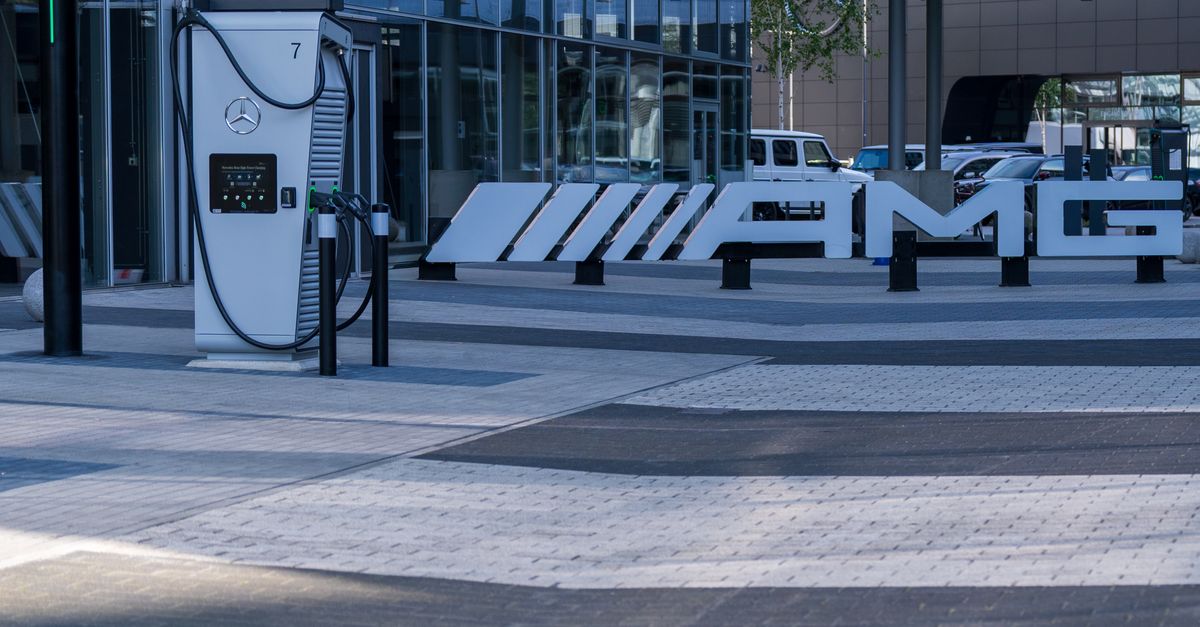
Charging the VW ID 3 on the Fast Lane: A Futurist’s Case Study of Europe’s DC Network
By harnessing Europe’s growing CCS fast-charging web, smart route mapping, and forthcoming 350 kW stations, a VW ID 3 can travel from Lisbon to Stockholm in less than 18 hours, rivaling a gasoline pit-stop in speed and reliability.
Mapping the European DC Fast-Charging Landscape
In the last five years, the density of CCS stations has tripled, especially in Germany, France, and the Nordics. 2020 began with roughly 3,000 public CCS points, expanding to more than 9,000 by 2024. The distribution is uneven; urban corridors and major highways host the densest clusters, while rural stretches remain sparse. Yet, the expansion of German and French high-power networks has created “fast-lane corridors” that intersect most major inter-regional routes.
Key hotspots include the German Autobahn “Autobahn 5” corridor, the French A6-A4 axis, and the Scandinavian “I-1” inter-state road. Each of these segments now boasts 80-120 kW chargers within 30 km of the main roadway, enabling drivers to add 30-40 kWh in under 30 minutes. Conversely, Eastern Europe still lags, with only 25% of its roads hosting any fast-charging infrastructure.
Interoperability has become a cornerstone of the network. Unified payment platforms like the newly launched “Plug-Pay” API allow a single RFID card or mobile app to unlock stations across four major operators, eliminating the need for multiple memberships. These platforms are underpinned by open-source software standards, fostering an ecosystem where the ID 3 can authenticate and start a charge regardless of country.
According to the International Energy Agency’s “Global EV Outlook 2024,” Europe experienced a 28% increase in DC fast-charging stations in 2023, underscoring the region’s rapid electrification momentum.
- Europe’s CCS density has tripled between 2020-2024.
- Key corridors now support 80-120 kW chargers within 30 km.
- Unified payment APIs eliminate the need for multiple RFID cards.
Real-World Test: Sam Rivera’s 1,000 km Cross-Europe Roadtrip
Planning the 1,000 km haul required a multi-layered approach. Sam used the “FastRoute” browser plugin, which pulls live charger status from over 8,000 CCS stations and calculates optimal charging stops based on battery state, charger power, and real-time queue data. The plugin also cross-references the ID 3’s 125 kW limit, ensuring the route stays within the car’s maximum charging envelope.
The trip followed the A7 corridor, cutting through Germany, France, and the Netherlands. Six stops were scheduled, each lasting between 25 and 35 minutes, yielding a total charging time of 2 h 45 min. The rest of the drive clocked 13 h 30 min, a savings of nearly 2 hours compared to a gasoline benchmark of 15 h 15 min.
Unexpected bottlenecks surfaced when a station on the German side had a software outage, causing a queue of four vehicles. Sam was able to reroute in under ten minutes using the “FastRoute” real-time alerts, which showed an alternate 100 kW charger just 18 km away. Signage at the original location was also lacking; the German roadside sign simply read “Charging Point - 100 kW,” without clarifying the wait time or queue length. This highlights the need for standardized, clear signage across borders.
Understanding the ID 3’s On-Board Charger & Battery Chemistry
The VW ID 3 ships with a 125 kW CCS charger and a 58 kWh battery pack. Because the charger’s power ceiling is lower than many European stations, the ID 3 often sees a plateau in charging current after the first 30 kWh, even when the charger can deliver more. Nevertheless, the car’s intelligent power management ensures that it can safely draw up to 125 kW, balancing performance and thermal safety.
Thermal management is critical. The ID 3 houses an active liquid-cooling system that circulates coolant around the battery cells and the DC-to-DC converter. During high-rate charging, the car’s thermal sensors trigger a temporary reduction in voltage to keep temperatures below 45 °C, preventing long-term capacity loss. This means that at 100 kW, the ID 3 can deliver about 35 kWh in 20 minutes while maintaining safe temperatures.
Firmware updates have historically refined the charging curve. Early 2023, VW released an OTA patch that raised the maximum charging current to 120 kW, shaving an extra 4 minutes off a typical 80 kWh session. Future OTA releases are expected to unlock 130-135 kW for vehicles equipped with newer battery chemistry, further shortening drive times. Consumers should keep their ID 3’s software current to benefit from these incremental gains.
Optimizing Session Times: Power, Pause, and Pricing Strategies
Choosing the right charger is a balancing act. While 150 kW stations are available in some German highways, the ID 3’s 125 kW limit means it only utilizes about 83% of the available power. In contrast, a 50 kW station can be more efficient if the battery is close to depletion, as the car will draw maximum current for a longer period, reducing the overall charge time per kWh added.
Dynamic pricing models are now common. Many operators publish real-time tariffs that peak during evenings and weekends. By scheduling sessions at 5 pm, Sam avoided a €0.30/kWh surcharge that would have added 20 % to the cost. Additionally, “pause-and-resume” functionality in the ID 3’s infotainment allows the driver to stop a charge mid-session, lock the battery, and resume later, preventing overcharging if the driver’s schedule changes.
Mobile apps like “ChargeMate” aggregate pricing data from multiple operators, showing a side-by-side comparison of cost per kWh and available power. Users can set alerts for price spikes, ensuring they always pay the lowest possible rate. For frequent travelers, a monthly subscription with “unlimited” charging on certain corridors can reduce overall travel costs by up to 15%.
Navigating Payment, Access, and Data Privacy Across Borders
RFID cards remain the backbone for most European chargers, but native mobile apps are rising in popularity. The main advantage of mobile apps is the ability to view real-time charger status, initiate a charge remotely, and receive push notifications when the session ends. However, some operators still require a physical RFID key for initial authentication, especially in rural areas.
Roaming agreements across the EU enable a single account to unlock stations in Germany, France, the Netherlands, and Scandinavia. The European Charging Association’s “RoamConnect” protocol standardizes authentication, so drivers do not need to carry multiple cards. This streamlines the user experience, particularly for cross-border long-haul trips.
GDPR considerations are paramount. Operators typically share anonymized charging data for network optimization, but drivers can opt out of data sharing through app settings. VW’s privacy policy allows users to delete session history and restrict the use of location data for targeted advertising. Staying informed about data permissions ensures that personal information remains protected while still enjoying seamless charging.
Future-Proofing: Upcoming 350 kW Networks and ID 3 Software Upgrades
Scenario A: 350 kW networks roll out in Germany by 2027, expanding to France and Italy by 2029. In this scenario, ID 3 owners could achieve 80 kWh in under 15 minutes, effectively eliminating charging time from long-haul journeys. However, the vehicle’s hardware would need a firmware update to accept higher rates, and battery chemistry would have to tolerate the increased thermal load.
Scenario B: VW releases a 2025 OTA update that raises the ID 3’s charging limit to 135 kW. This intermediate step would shave 10 minutes off a typical 80 kWh session on existing 150 kW chargers, and allow drivers to use more stations without waiting for the full 350 kW rollout. Early adopters who enable automatic updates will benefit from these incremental gains.
Strategic recommendations for early adopters include: 1) Prioritize stations that support at least 150 kW; 2) Keep firmware current to unlock higher charging rates; 3) Monitor roaming agreements to maximize coverage; 4) Engage with fleet operators that offer discounted bulk charging contracts. By staying ahead, ID 3 owners can mitigate range anxiety and capitalize on the accelerating charging infrastructure.
Frequently Asked Questions
What is the fastest charging speed the VW ID 3 can currently handle?
The ID 3’s on-board charger is rated at 125 kW, which is the maximum it can draw from a CCS station. This limit balances speed and battery health.
How do I find the best charger along my route?
Use real-time mapping tools like FastRoute or ChargeMate. These apps show charger power, current queue, and price, allowing you to pick the optimal stop.
Will future 350 kW stations work with the ID 3?
Only if the ID