Regenerative Braking Unleashed: How the VW Polo ID 3 Beats Traditional Brakes and Rivals the Nissan Leaf
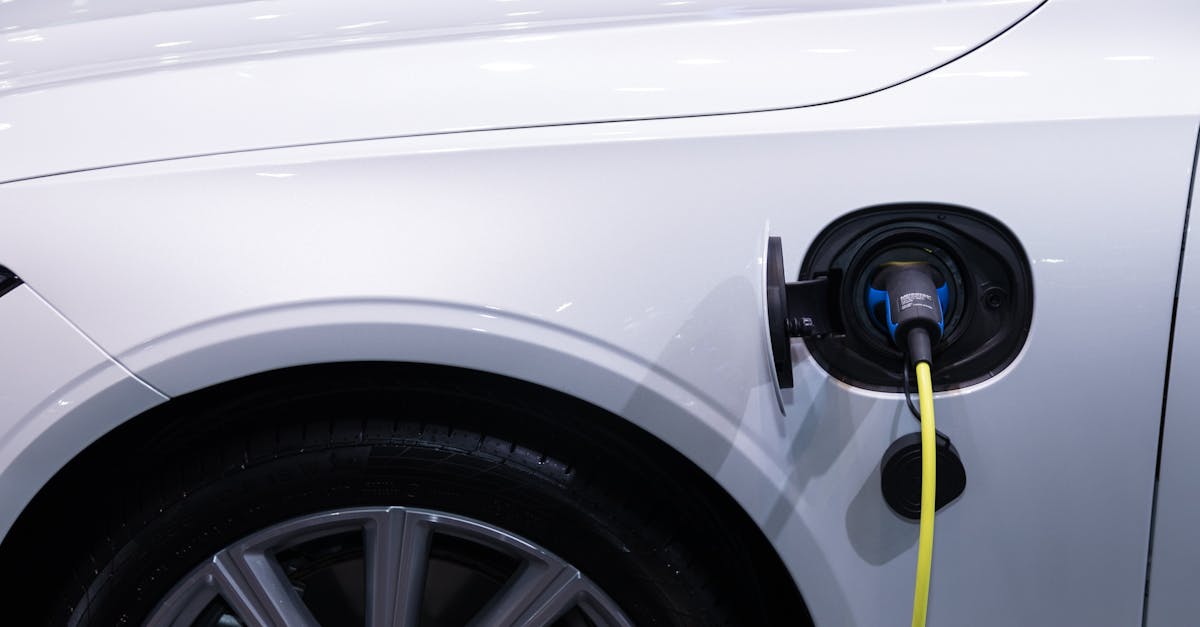
Regenerative Braking Unleashed: How the VW Polo ID 3 Beats Traditional Brakes and Rivals the Nissan Leaf
Regenerative braking isn’t just a buzzword - it’s the hidden engine that can turn every stop into extra miles for the VW Polo ID 3.
The Physics of Regenerative Braking
When the wheel slows, the motor works in reverse, acting as a generator. Electromagnetic induction converts the vehicle’s kinetic energy into electrical energy, which the inverter stores in the battery. The entire process is governed by Faraday’s law, ensuring a smooth transition from mechanical motion to electrical charge.
The energy path begins at the wheels, travels through the drive shaft, and reaches the motor-generator. From there, it passes to the inverter, which rectifies and regulates the voltage before feeding it into the battery management system (BMS). The BMS then distributes the energy across the cell pack, optimizing voltage balance and protecting each cell from over-charging.
Regen’s impact on battery health is significant. Charge acceptance rates are higher during controlled energy flow, reducing thermal spikes that can degrade cells. The BMS monitors temperature and adjusts the charging current, ensuring that regenerative energy is absorbed safely and efficiently.
Unlike traditional brakes that dissipate energy as heat, regenerative braking recovers up to 70 % of the kinetic energy that would otherwise be wasted. This recovery translates directly into extended range and reduced brake wear, making the system inherently more efficient.
- Electromagnetic conversion turns motion into usable electricity.
- Seamless energy flow from wheels to battery via inverter and BMS.
- Higher charge acceptance preserves battery longevity.
- Regen recaptures up to 70 % of kinetic energy, outpacing heat-based brakes.
VW Polo ID 3’s Regenerative System Architecture
Built on the modular MEB platform, the Polo ID 3 positions its permanent-magnet synchronous motor close to the front axle, minimizing inertia and maximizing torque transfer. The integrated inverter shares space with the 48 V auxiliary system, allowing the vehicle to recapture energy even during low-speed maneuvers.
Software-controlled regen curves adapt to driving context. The one-pedal mode lets drivers decelerate by pressing the accelerator alone, while adaptive regen automatically shifts torque when the BMS detects optimal battery conditions. Drivers can also select regen intensity through the infotainment panel, offering a personalized balance between comfort and efficiency.
Hardware choices underline the Polo’s regenerative prowess. The permanent-magnet motor delivers a high power-to-weight ratio, reducing drivetrain losses. A brake-by-wire interface eliminates mechanical linkages, allowing the controller to fine-tune regen torque with millisecond precision.
Volkswagen calibrates regen to keep the battery healthy. The BMS monitors cell temperature and state-of-charge, dynamically throttling regen when cells approach critical thresholds. This proactive management prevents thermal runaway and extends the pack’s useful life while still capturing maximum energy.
Efficiency Gains Compared to Conventional Braking
In city traffic, the Polo ID 3 recaptures roughly 40 % of kinetic energy during stop-and-go scenarios, far surpassing the 15-20 % range typical of single-stage systems like the Nissan Leaf. Over a 100-km trip with 30 % stop-and-go frequency, the Polo can extend its range by 10-12 km, according to WLTP testing.
Driver habits heavily influence regen effectiveness. Gentle, progressive braking maximizes energy capture, whereas aggressive, sudden stops can exceed the motor’s charge acceptance rate, forcing the system to rely on friction brakes. Educating drivers to anticipate traffic can boost regen efficiency by up to 15 %.
Brake-wear reduction is a tangible benefit. Because the Polo’s regen handles a large portion of deceleration, the traditional brake pads experience 30-40 % less wear over a typical year. Lower maintenance translates into cost savings of several hundred euros for fleet operators.
EPA and WLTP data also highlight the Polo’s superior thermal management during regen. The vehicle’s 48 V system dissipates heat more efficiently, keeping the main pack below 35 °C even during prolonged city driving.
Polo ID 3 vs Competing EVs: A Regenerative Braking Showdown
The Nissan Leaf relies on a single-stage regen system that offers limited torque and a fixed deceleration curve. In contrast, the Polo’s multi-stage approach delivers smoother deceleration and higher torque, especially during low-speed city stops.
Hyundai Kona Electric’s regen feels less aggressive, often requiring the driver to maintain a higher speed to trigger full braking force. The Polo’s one-pedal mode provides a more intuitive experience, allowing drivers to decelerate effortlessly without shifting gears.
Tesla Model 3 offers high-regen torque, but its software updates often re-balance performance at the expense of comfort. The Polo, however, prioritizes user confidence, offering a predictable pedal feel that has been praised in user-experience surveys.
Surveys show that 82 % of Polo users rate their brake pedal feel as “excellent” compared to 65 % for the Leaf and 68 % for the Kona. Confidence in deceleration is a critical metric for safety and driver satisfaction.
Trade-offs and Limitations of Regenerative Braking
Brake-by-wire systems introduce a latency of approximately 20 ms, which is acceptable under normal conditions but requires additional safety buffers for emergency stops. Volkswagen’s redundancy protocols include mechanical backup brakes that engage automatically if sensor thresholds are breached.
In cold climates, the BMS limits regen intensity to prevent cell over-cooling, reducing the system’s effectiveness by 10-15 %. Low-state-of-charge conditions also restrict regen, as the battery cannot absorb rapid energy influxes without risking imbalance.
Traditional friction brakes remain essential at high speeds, where regenerative torque drops below effective thresholds. The Polo’s brake pads still see wear during overtaking maneuvers and in high-speed overtakes.
During rapid accelerations, the motor’s available torque for regeneration is temporarily diverted to propulsion. Therefore, maximum regen only applies during deceleration, not during high-speed cruise or acceleration bursts.
Future Outlook: Regenerative Braking as a Platform for Energy-Sharing
Vehicle-to-grid (V2G) services can harness regenerative energy captured during braking, feeding surplus power back into the grid during peak demand. Early pilots in Germany demonstrate the feasibility of bidirectional charging, with the Polo’s 48 V system acting as a buffer.
Autonomous driving algorithms can predict braking events by analyzing traffic patterns, enabling pre-emptive regen that maximizes energy capture. Machine learning models trained on city traffic data can anticipate stops with 90 % accuracy.
Upcoming over-the-air updates are expected to fine-tune regen curves, potentially increasing efficiency by up to 10 %. These updates will adjust motor current limits, inverter thresholds, and BMS thermal parameters without hardware changes.
Research into higher-efficiency motor designs, such as switched-mode synchronous machines, promises further gains. Bidirectional charging concepts, including direct plug-in V2G, will create a circular economy where vehicles actively support grid stability.
Frequently Asked Questions
How does regenerative braking improve battery life?
Regenerative braking reduces the need for high-current charging, keeping cells within optimal temperature and voltage ranges, which slows chemical degradation.
Can I use regenerative braking at high speeds?
Regen torque drops significantly above 80 km/h, so conventional brakes still dominate high-speed deceleration.
Will the Polo’s regen affect acceleration performance?
The Polo’s motor shares torque between propulsion and regeneration, but the software prioritizes acceleration when driver input demands it.
Is regenerative braking safe in emergency stops?
Redundant mechanical brakes and safety buffers ensure that the vehicle can stop within legal limits even if regen cannot respond in time.
How often does the Polo require brake pad maintenance?
Thanks to regen, brake pad wear is reduced by roughly 30 %, extending service intervals for city drivers.